
Private telescope evenings · Surrey
Surrey Sky Tales
A real night under the Surrey sky
with a Meade 12" telescope.
Saturn, Jupiter and the Moon, live in the eyepiece. Real objects, a real eyepiece, and someone beside you to show you where to look.
Look through the telescope
The telescope is the experience.
Meade LX90 12" · Schmidt-Cassegrain on a tracking mount
What to expect
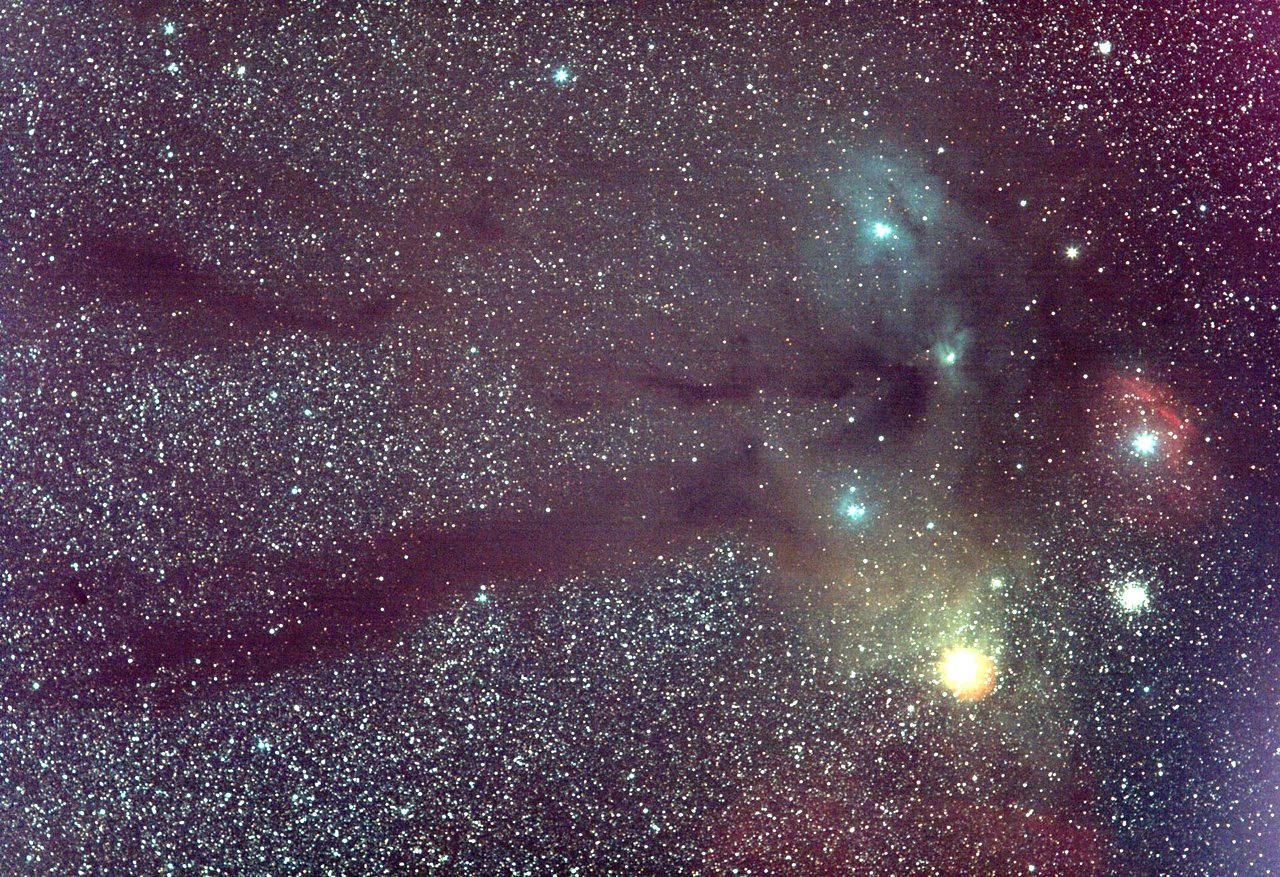
We mostly see the Moon and the planets, live through the eyepiece. Distant galaxies and nebulae are only faint glows to the eye — the colourful pictures are astrophotographs. More on that below. You will see in practice how astrophotographs are made! I'll tell you about the structure of the Universe and our Galaxy, about stars, black holes, how scientists search for life on exoplanets, and much more.
A Meade LX90 12" Schmidt-Cassegrain on a tracking mount, proper eyepieces, and the same setup used to take the astrophotographs on this site.
You don't need to know a thing about aperture or focal length. All that matters is what it does: it finds real objects in the night sky, holds them steady, and puts them in front of your eye.
We meet after dusk and drive out to a dark spot away from the worst of the light pollution — the kind of place where your eyes slowly adjust and the sky keeps getting deeper the longer you stand there.
Price
One price for the whole night.
£50 per person covers the whole evening and night at the eyepiece — 3 hours as standard, and longer when the sky is generous, at no extra charge.
Adults
£50
per person · age 16 and over
Youngsters
£30
per person · under 16
Groups
Schools and other groups
Arranged separately, with additional discounts. Just ask.
Minimum 3 people per evening. Fewer than 3 of you? You're very welcome — just book (and pay for) 3 places.
Payment
Nothing is paid in advance: the final decision is made on the day, a few hours before the start, because under a cloudy sky there is nothing to look at. But don't let that put you off — in 80% of cases we get what we planned.
At your place
Rather have the telescope in your own garden, or at a birthday, wedding or party? We come to you — the same prices plus travel: £50 within Surrey, £100 for Berkshire, Hampshire and West Sussex. Stargazing at your place
Seeing the difference
What a 12-inch telescope actually resolves.
The 12" Meade LX90 can reveal surprisingly fine detail even at long distances. This daytime example shows a fly on a distant chimney.
What might we see?
It depends on the night.
What we observe depends on the season, the night, the weather and what is above the horizon. No two evenings show the same sky — and that's part of why it's worth doing properly.
Honest expectations
What the eyepiece shows — and what it doesn't.
- Mostly near space. The Moon and the planets are the stars of the evening: bright, sharp and unmistakable.
- Deep space is faint. Galaxies and nebulae show only as soft, grey glows. The vivid colour pictures on this site are astrophotographs — long exposures made with a camera, not what an eye sees.
- I'll show you how it's done. On the night I can demonstrate astrophotography, and we can try to photograph something deep together.
- Please don't expect Hubble. Views like Hubble's are long exposures from space; no telescope on Earth shows them to the eye.
The Moon & planets
The Moon rewards patience. Near the terminator — the line between lunar day and night — shadows stretch for miles and craters stand out in relief. Come back an hour later and the light has already changed.
Planets are bright, and brightness beats darkness. They hold up well even when the sky isn't perfect, and they're the moment most guests step back from the eyepiece and ask to look again. Which planets are on show changes through the year, so nothing is promised in advance — but when Saturn is up, it's the one people remember.
Jupiter
Dark cloud belts, and the four large moons strung out in a line that visibly shifts from night to night.
Through the telescope
Saturn
The rings separate cleanly from the planet. Nobody is quite prepared for it looking that much like the pictures.
Through the telescope
Which planets are up tonight? The sky tonight · Saturn, Jupiter and the Moon in detail
Star clusters
Loose swarms and tight globular knots of thousands of stars, resolving into pinpoints as your eye adapts.
Nebulae
Clouds of glowing gas, seen as soft grey-green structure through the eyepiece rather than as colour.
Galaxies
Faint patches of light — but light that left another galaxy millions of years before it reached your eye.
Double stars
Pairs that split into two suns at high magnification, sometimes with beautiful contrasting colours.
Your host
“You don't need to know anything about astronomy. I'll show you where to look.”
I've spent years observing and photographing the night sky, mostly for the pleasure of it. The best part has always been handing someone the eyepiece for the first time — watching them find Saturn, or realise the faint smudge they're looking at is another galaxy entirely. That's what these evenings are for.
Where we meet
Our dark spots.
We meet at one of a few dark, open places around Guildford and Godalming, chosen together for the evening: the forecast, the wind and where you are coming from.
Newlands Corner Car Park
Up on the North Downs just outside Guildford. The views are wide and open, and parking is free in the evening and at night.
Drove Road, Albury, Guildford, Surrey GU4 8SE
Place
Besides our usual locations, you can suggest a place for the observing. It should have a good view of the whole sky in every direction, no sources of light, as little wind as possible and easy access by car. Or the telescope comes to you: stargazing at your place. Coming from further away? How far is it from your town.
Dress warmer than you think.
Even if it feels like a warm summer evening when you set off, it won't once you've stood still under a clear sky with a little breeze. Please bring a hat that covers your ears, a scarf for your neck and warm layers — and, if you can, a flask of hot tea: it always helps. Please take this seriously: if you are cold, or even just uncomfortable, the evening will lose its charm.
Enquire
Plan your night under the stars.
Tell me a little about the evening you have in mind — a couple, a family, a birthday, or just curiosity — and I'll come back to you to agree a night that suits the sky.
Pick a provisional date on the calendar: green evenings look best for the weather. The forecast reaches about ten days ahead; for later dates just pencil one in, and we'll watch the sky together as the night approaches.
Prefer to talk? Call or message me on +44 7404 933156 Alex (calls, texts or WhatsApp) or email sky@alneste.com.
The sky that night
What will be overhead that evening.
The sky this evening at 10 pm — planets, the Moon, all the Messier objects and the best-known NGC objects, as seen looking up. Pick a date in the calendar above and the chart shows that evening. It is drawn for the Guildford area; at any of our spots the sky is practically the same. Expand the map (click “Explore the map”) to look around, zoom in and move the clock.
At 10 pm
…
The Guildford area, looking up, north at the top, east on the left.
Working out the planets…
Positions are calculated for the Guildford area (astronomy-engine); across our spots the difference is too small to see; stars, constellations and Messier/NGC objects from open catalogues (d3-celestial, OpenNGC CC BY-SA 4.0). The chart shows where things are, not how they look: through the eyepiece most deep-sky objects are faint grey glows.
The Milky Way
Under a dark sky, the Milky Way stops being a photograph.
It becomes something you are standing inside — a band of light across the whole sky, made of stars too numerous and too distant to separate. Give your eyes twenty minutes without a phone screen and you'll see it properly.
The background here is a wide-field long exposure. To the eye the band is fainter and grey, but it stretches right across the sky.
Gallery
Photographs from real nights.
Every photograph here was made by your host: colour and monochrome, deep and faint, newer and older, sometimes several versions of the same object. They are kept as they are, because the differences are part of the story.
Each image is labelled by how it was made — through the telescope, wide-field, or long-exposure astrophotography.
The eye does not see everything. A camera can gather light for minutes at a time; your eye cannot — so the astrophotographs in the gallery, made with a Meade LX90 12" and a Nikon D7000, show more detail and colour than the eyepiece does. Through the telescope the same objects are fainter and softer, and seeing them live is still the better half of the evening.
Hubble Deep Field
Point at nothing. Find everything.
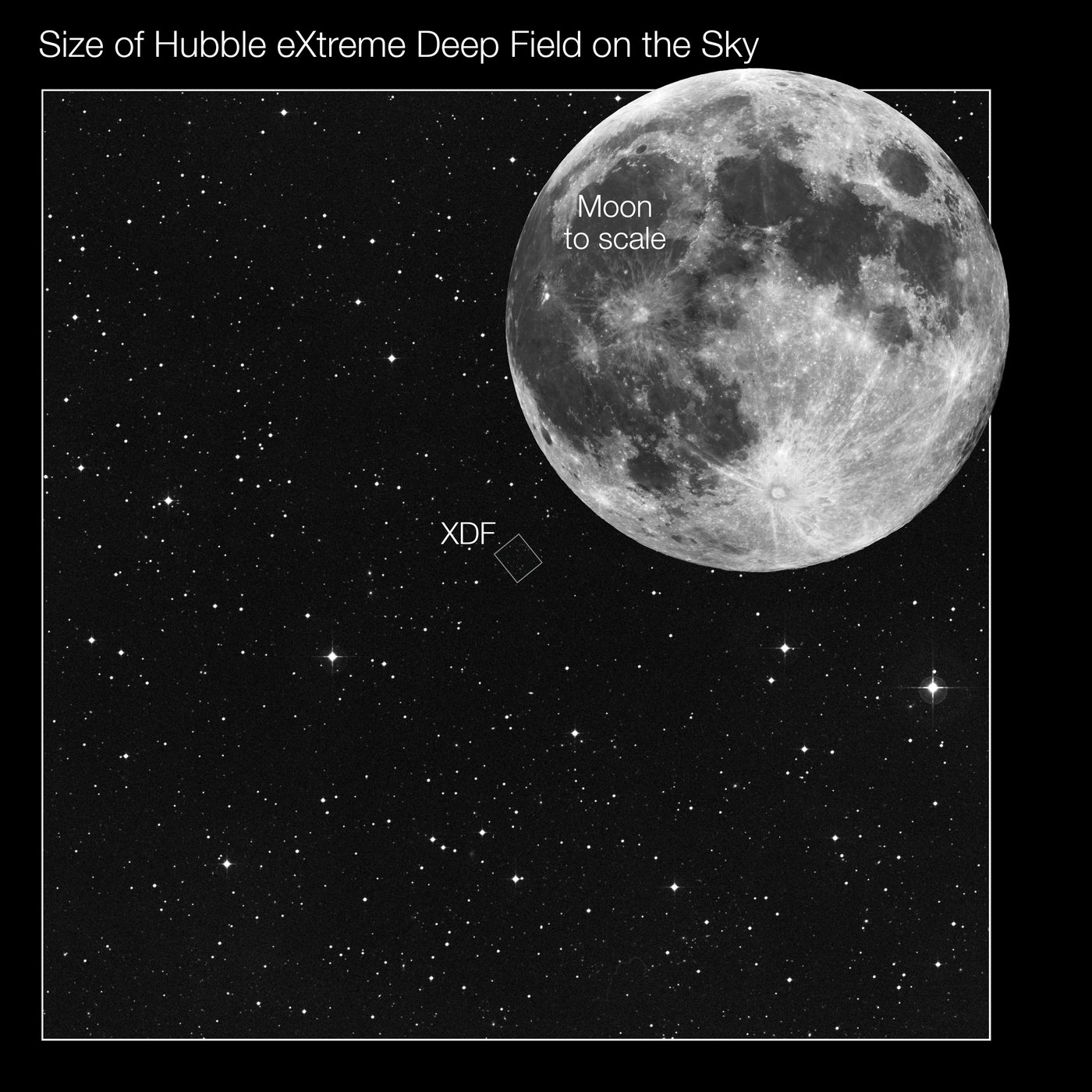
Pick a patch of sky that looks completely empty — a tenth of the width of the full Moon — and stare at it for days with the Hubble Space Telescope. That is what these two images are.
Almost every dot and smear in the deep field is not a star but an entire galaxy, each one holding hundreds of billions of stars, some of them shining from when the Universe was young. This is the scale of things we talk about at the eyepiece — and the reason a faint grey smudge in a 12-inch telescope is worth standing in the cold for.
Both images are by NASA/ESA and the Hubble Space Telescope (the deep field, the chart), shown here for scale and context — not photographs taken by your host.
Guest reviews
Nights people still talk about.
A few words from guests who have stood at the eyepiece. If you've been out with me, I'd love to hear how the night went.
Guests' reviews will appear here after the first evenings.
Been out with me? Please tell me how it went — I read every one and add it to this page myself.